


Shutterstock
I feel like there’s this misconception that being paid a salary is a good thing. Maybe that’s because a lot of higher level jobs are salaried positions, so it’s easy to assume that it’s more elite to be paid a salary.
But often being paid hourly is actually much better, because do you know what salary employees don’t get? Overtime. That’s right. They could work long hours and weekends, but they’ll get paid the same. If an employee works a lot of overtime and is paid hourly, they’re going to make a lot more money.
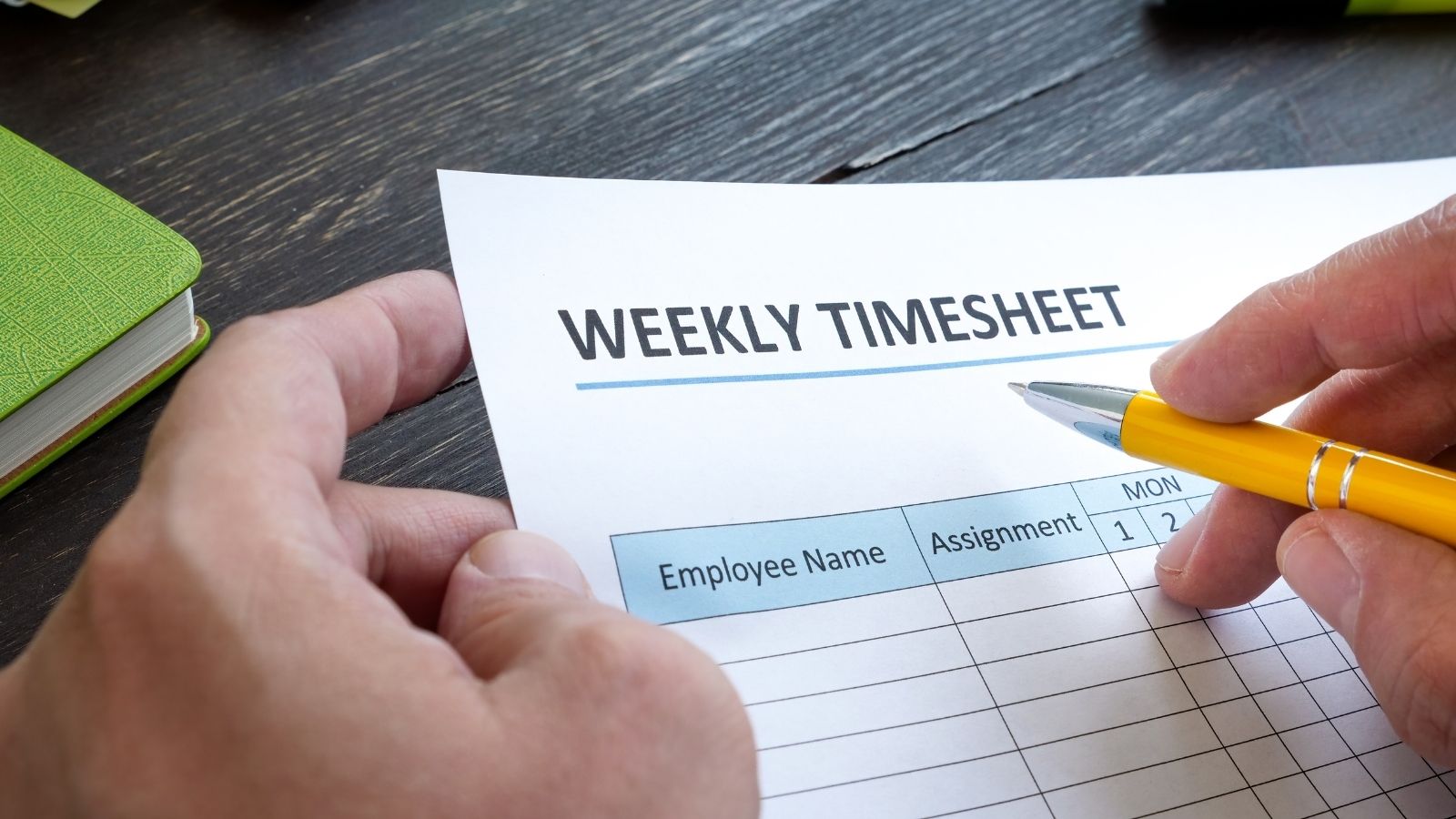
In this story, a salesman who used to be on salary is now an hourly employee, and he has to fill out timesheets. Instead of getting upset about it, he makes it work to his advantage.
Keep reading for the whole story.
You want me to submit timesheets? You got it!
I used to work at a large, international company in an inside sales role where we were paid on a salary + commission basis.
My boss sucked, there was no career path, and the corporation was an incoherent mess but the team was cool and the money was good so it wasn’t a bad gig overall.
Then went from salary to hourly.
Fast forward to the end of my second year on the team and our boss calls a team meeting where his boss announces that after a long, protracted battle with the Department of Labor our team were being reclassified as hourly employees and going forward we would need to submit timesheets in order to receive our base earnings.
Needless to say since we were accustomed to taking all the free time available to us during the day for lunch, coffee/smoke breaks, etc (not to mention accruing and using vacation time that no one actually bothered tracking) this was not a popular decision.
After a few minutes of us arguing and pushing back against this my boss announced that the decision was done and we earned the bulk of our pay through commissions so we’ll just have to deal with it.
Ok, fine.
He explains why he’s often late for work.
At this point I feel that I should mentioned that I have a somewhat casual relationship with time. When it comes to important things like client appointments I’m always prompt and ready to go right on time, but in terms of showing up for work exactly when I need to start my day, or 15 minutes early as some bosses expect, is just not my thing.
My attitude has always been that as long as you’re producing and getting your job done who cares if you’re 15 minutes late in the morning or take an extra long break in the afternoon or peace out right at 5 on the dot.
It’s an office job not one where someone else is relying on my promptness to end their shift.
I’ve consistently been a top two or three performer and while I’ve had my share of obligatory “please show up on time” conversations with bosses they eventually realize I’m super productive so just let me do my thing.
He decided to track his time carefully.
So now I need to start documenting my time.
I check the official HR notice about the change and my role is expected to work a maximum of 40 hours a week. And now that I’m an hourly employee instead of salaried I’m, surprise surprise, eligible for overtime.
Well if I’m forced to do this and rules are rules then I’m going to document my hours perfectly.
I start noting exactly when I show up at the office in the morning, start and end of every break, and exactly when I leave down to the minute.
He racked up overtime.
At the same time I started to work straight through my lunch hour and I started showing up a few minutes earlier than usual to start my day too, you know, to clock in properly.
I started submitting time sheets for 45-50 hours a week and started to bank a fat chunk of overtime at time-and-a-half per paycheck that I previously was ineligible for and was not budgeted for by the company.
Fast forward a few weeks and my boss calls me over to his desk. He had my timesheet up with start and end times like 8:23am and 5:12pm, etc and was not happy.
The boss made a request.
I forget what exactly he said but he basically told me to knock it off and round my times to the official start and end time like everyone else on the team.
He wasn’t a bright individual and I realized three things: he just didn’t like counting my hours to the minute (basic math is tough); he never said anything about my non-existent lunch breaks; and he either knew nothing or said nothing about my OT pay.
“No problem boss, you got it.”
Things changed again.
From then on my start and end times matched the official times but I continued to either work through lunch or take only thirty minutes of the allocated sixty minutes and continued to submit timesheets with 2-5 hours of OT.
I never heard another peep from my boss and a few weeks later they quietly discontinued the manual timesheets and just paid us in full at our annual salaried rate.
I wonder why his boss never mentioned the overtime. You’d think that would be the real issue, not putting down exact times like 8:23am.
Let’s see how Reddit responded to this story.
This person thinks the boss is asking the salesman to do something illegal.


Another person doesn’t think they got rid of the timesheets because of OP.


Another person shares a way the company could’ve avoided paying overtime.


If you enjoyed this post, check out this story about a contractor who flew along way and spent 3 days on a fix only to find a breaker that needed to be flipped.
This person calls the bosses lazy.


What’s interesting is that OP said he used to show up late for work at lot. It sounds like once the timesheets started, he made sure he showed up early instead. That’s a positive improvement all because he had to write down what time he arrived.
The timesheets may have been annoying, but at least he got paid overtime. Without the timesheets, it sounds like the overtime has also disappeared.
I’m not sure this is an improvement.