
Wildfire Smoke Can Travel Thousands Of Miles And Remain Dangerous According To New Paper

Shutterstock
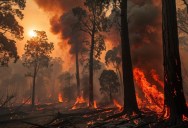
Wildfires can be absolutely devastating to the area where they burn. They destroy trees and other plants, kill countless wildlife animals, destroy homes, and can even kill those who live in their path.
In addition, people who happen to be downwind from the fire can end up experiencing hazy conditions due to the smoke and particulates that get pushed up into the atmosphere. Over the summer, for example, people living across multiple states in the Midwest had weeks of poor air quality due to the Canadian wildfires.
While inconvenient, most people dismissed the risk of this smoke since it was able to be spread out so widely that it would not immediately be a danger to anyone except those who already have respiratory issues.
According to a new study published in the Lancet Planetary Health journal, however, that may not actually be the case.
The study suggests that deaths related to wildfire are underestimated by as much as 93$ because of the fact that they do not account for the deaths caused by smoke in distant areas. In the area where the study was conducted, they found that 535 people on average died each year due to respiratory conditions that were triggered by breathing air with elevated particulate matter (PM2.5).
Shutterstock
In the past, it was assumed that breathing PM2.5 air was no more dangerous than breathing the air while in traffic, but a 2021 paper has since disproven that myth. In fact, this level of particulates in the air is actually about ten times more deadly.
The paper also mentions the fact that wildfires are becoming far more common in recent years due to the effects of climate change, indicating that many more people will likely be affected in the coming years.
Most of those who are at serious risk due to poor air quality like this already have respiratory issues, and the smoke or other particulates serve to aggravate them and sometimes lead to respiratory arrest. Staying indoors and filtering the air can provide some protection, and using filtering masks when you have to go outside is also important.
The only real solution, however, would be to minimize climate change impact and work to contain wildfires as soon as possible so that the smoke cannot enter the environment in the first place.
If you thought that was interesting, you might like to read a story that reveals Earth’s priciest precious metal isn’t gold or platinum and costs over $10,000 an ounce!





Sign up to get our BEST stories of the week straight to your inbox.
