
Patient Survived For 171 Days After The First Of Its Kind Pig-To-Human Liver Transplant

Shutterstock
Hundreds of thousands of people are in need of some type of organ transplant. Unfortunately, there are not nearly enough organs available for everyone, which means that the medical community has to pick and choose who gets them.
The tragic result of this is that thousands of people each year die because they could not get the organ that they needed.
The medical industry is working hard on coming up with ways to help those who need organs, but it is a very difficult problem to solve. One potential solution is called xenotransplantation, which is using the organ of an animal and transplanting it into a human.
Unfortunately, there are a number of obstacles that need to be overcome in order to make this type of transplantation a success. Since the risk is so high with this type of transplant, there are very few cases where both the doctors and the patient are willing to give it a try, which can slow progress in the method.
Shutterstock
A 71-year-old man in China, however, was one of those people who had no other options. He was diagnosed with hepatitis B-related liver cirrhosis and also had a large tumor on the right lobe of the liver. His doctors found that removing the right lobe was not a viable option as it would have likely caused liver failure.
He was not eligible to get a liver transplant from a donor due to local guidelines, and nobody in his immediate family was suitable.
So, left with no other choice, his doctors began the process of getting a pig donor ready. This began with genetically modifying the pig. They had to make 10 separate modifications in order to eliminate genes that the human immune system could react to.
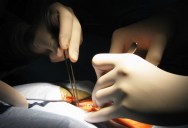
Once ready, doctors removed his tumor and implanted the liver from the pig.
By all accounts, the surgery was a success. He was recovering well with no signs of rejection until 38 days later. At that point, he experienced a complication known as xenotransplantation-associated thrombotic microangiopathy (xTMA). The doctors had to remove the donated liver.
They continued to treat the patient, but he began bleeding in his upper gastrointestinal tract on day 135, and finally passed away on day 171.
While not ideal, this is by far the most successful transplant of its type.
Lead investigator on this case, Dr. Beicheng Sun, is the President of the First Affiliated Hospital of Anhui Medical University. In a statement about the case, he described it as:
“a pivotal step forward demonstrating both the promise and the remaining hurdles, particularly regarding coagulation dysregulation and immune complications, that must be overcome.”
Other doctors have said that the case was technically a success, given that he survived for so long and the liver was working for a time.
Shutterstock
Details about the case were written into a study, which was published in the Journal of Hepatology.
While more work is clearly needed before this type of thing can be used on a regular basis, it should give hope for the future. If doctors can improve the process to the point where a pig (or other animal) organ works as an effective transplantation option (either as a temporary fix or a permanent solution), it could save thousands of lives each year.
If you found that story interesting, learn more about why people often wake up around 3 AM and keep doing it for life.





Sign up to get our BEST stories of the week straight to your inbox.
