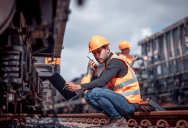
A Railroad Worker Clocked Out Right On Time, And A Two-Mile Train Was Left Sitting In Front Of The Steel Mill

Canva
Absolute workplace rules can cause huge problems when managers refuse to allow any common sense.
A steel mill banned all overtime, even though railroad crews sometimes needed extra time to finish their routes.
Instead of breaking policy, this veteran timed his final train perfectly and clocked out exactly when ordered.
Read on to see how one punctual departure brought the entire mill to a screeching halt.
The time my grandfather in law shut down a steel mill and got overtime rules changed.
This story takes place in the 60s.
Grandfather-in-law was a WWII vet, was a POW in Italy, got out of the POW camp, and rejoined his unit, then continued the war. So a verified bad***.
After the war, the grandfather got into a different kind of career.
He worked the railroad at a steel mill—just locally moving cars and setting up the train, moving stuff from one plant to the other, that kind of thing.
The mill was on either side of a river with a rail bridge connecting them, and the main rails ran right through both sections of the mill. So when he came through with a lot of cars, it would temporarily close the roads in the mill.
This job required long hours, but luckily, he was paid for this extra work.
He would get a little overtime quite often, just by the nature of the job—a couple of hours or so per week.
When it was shift change time, but you were driving a train, you needed to finish up before you could run the engine back to let your relief take over.
Until management decided to start meddling.
So of course, the mill decided to make a “no overtime, no exceptions” rule.
It took him a couple of weeks to get it timed just right.
So when the grandfather started complying with this new rule, things went south fast.
At 3 p.m., his shift was over. He parked the engine right by the time clock, clocked out, and went home.
He said there was almost two miles of cars hooked to the engine. It went through the section of the mill he was at, across the river, and into the other section of the mill.
All the track was owned by the mill, so it didn’t affect the actual railroad—just the mill.
Luckily, his union had his back.
The mill bosses wanted to punish him. I forget the details, but the Union shut that right down.
Nothing happened, and the rules changed the next day.
Policies as rigid as these often backfire spectacularly.
What did Reddit make of all this?
Sign up to get our BEST stories of the week straight to your inbox.
In business, it always comes down to the bottom line.
Unions really do serve an essential purpose.
It’s a good thing when workers stand up for what’s right.
Maybe not everyone is cut out to be a leader.
This railroad worker followed the no-overtime rule by leaving a two-mile train blocking roads on both sides of the steel mill.
The union stopped management from punishing him, and the company changed its overtime policy the very next day.
Management saved a little overtime and bought itself a full-sized, train-shaped traffic jam.
Enjoyed this story?







Sign up to get our BEST stories of the week straight to your inbox.
