
Experimental Brain Stimulation Treatment Leads Chronically Depressed Patient To Report Feeling Overwhelming Joy

Shutterstock
Depression can be a terrible condition, and it is one that millions of people suffer with. Those who have treatment-resistant depression (TRD) can struggle throughout their lives, which can make it difficult for them to hope or experience joy. Fortunately, new treatment options are always being worked on, and one in particular has been shown to be very effective in one trial.
The patient is a 44-year-old man who has had depression since he was a child. He had tried virtually every other treatment plan out there with little-to-no success. That is, until he got accepted into this experimental trial where his brain was stimulated in a specific way that resulted in what has been described by the researchers as remission of the symptoms.
The patient, his history, and the experimental treatment is the topic of a study that has been published and is awaiting peer review. Of course, additional trials will be needed, and longer observation of this patient, but these early findings seem to be very positive.
The researchers working on this treatment are mostly from the University of Minnesota. They brough the patient in to conduct the experimental treatment, which included minimally invasive brain stimulations that are known as personalized adaptive cortical electro-stimulation (PACE). This is a lot different than the historical ‘shock therapy’ in that it is much more precise and tailored specifically to each patient.
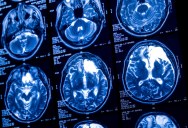
The treatment began with the patient going through a functional magnetic resonance imaging (fMRI) to give the doctors a clear picture of his brain activity. This allows them to target specific areas of the brain with much greater precision.
Shutterstock
One thing that the researchers noted from the scan was described in this way:
“[The patient’s] salience network was highly atypical. In [this patient], the salience network was expanded to cover 12.4 percent of the cortical surface area, a four-fold enlargement compared to healthy controls.”
The enlargement of this part of the brain has been linked with depression in the past. Based on the findings from the scan, the team performed a surgery that would implant four separate electrodes into the patient’s brain. Two were put in each hemisphere, right at the boundaries of where the salience network was overlapping the other networks.
The patient was then allowed to recover from the surgery, and then he went back in for the treatment.
Shutterstock
The treatment included a stimulation of the default mode network (DMN) of the brain. He talked about the immediate results, saying:
“It feels nice. So weird to feel. It is so emotional.”
The team then stimulated other parts of the brain, resulting in feelings of calm and relaxation. Interestingly, they could also produce anxiety in the patient when they engaged in specific other combinations of stimulation. This is a strong indicator that while the stimulation clearly works, the treatment needs to be done very carefully to ensure the desired results are achieved.
The patient came back for monthly visits with the team, and within seven weeks of treatment, the patient reported that their suicidal ideation had gone away completely. At four months into treatment, his mood is reported to have improved by 59%, and what is even more encouraging is that these improvements were maintained throughout the study, which lasted 30 months. The authors write:
“PACE provided [the patient] with the longest stretch of wellness he had experienced in his adult life.”
One big question now is whether these same results can be replicated again on future patients. It is likely that a larger study will be performed, assuming the peer review process for the paper goes well. Ramping up the studies is an important part of providing that the results they found in this patient can be replicated.
For now, however, this patient is experiencing sustained improvement, and that can give hope to millions of people struggling with depression.
If you found that story interesting, learn more about why people often wake up around 3 AM and keep doing it for life.





Sign up to get our BEST stories of the week straight to your inbox.
