
Concerned Scientists Experimenting With Hypothesised Mirror Microbes Suggest Halting The Experiments For Good

Pexels
From penicillin to the Higgs-Boson particle, from electricity to Quantum Mechanics, there’s no denying that science has done some incredible things for our lives, and for our understanding of life and everything around it.
But sometimes there are moments in which scientists have to take a step back, to question whether what they’re doing is right, and the potential repercussions should they choose to continue.
And that is exactly the position that scientists researching a hypothesis known as ‘mirror life’ organisms have had to do, with the contentious topic causing concern amongst the scientific community.
Why? Because some scientists think that bringing these organisms into the world could be the ultimate threat to everything we’ve ever known.
Pexels
On the surface, mirror life organisms might seem quite unassuming.
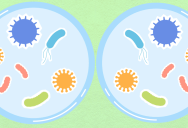
These as yet hypothetical organisms are very much like those we find on our planet, except that they’re flipped, as if you’re looking at them in a mirror.
This means that all the molecules in the bacteria would be the mirror image to those presently found on Earth – something that right now is impossible thanks to a concept known as chirality, meaning that they cannot simply be flipped and function normally, as biologist Sebastian Oehm explained to The Scientist:
“An amazing feature of nature is that all life on Earth, from the smallest bacterium, to plants, to animals, to humans, we’re all made of the same building blocks. And these building blocks that we’re made of, and they could, in principle, exist in two mirror forms, but life only uses one mirror form.”
Pexels
In synthetic mirror microbes, however, the organisms are flipped, with the natural left substituted for the right, and vice versa. As well as looking different under a microscope, this would also result in the organism engaging in very different, opposite, chemical processes.
This could be achieved in one of two ways: by building mirror microbes from scratch, or by modifying natural microbes in the lab. But here’s where we run into a potential threat: what happens if, or rather when, these mirror microbes replicate?
The result could be devastating for humans and other species, since the microbe could wreak havoc with our immune systems. This is because, while our antibodies know how to react to natural chirality microbes, their mirror life forms? Not so much.
The result could be a sepsis-like response, Oehm suggests, with the dramatic results by no means limited to our species:
“[Mirror microbes] could potentially kill a lot of people around the world. It could cause a lot of ecological harm and catastrophe. It could invade ecosystems that have never seen mirror life before, it could spread there and persist there. This is even worse than many other ecological catastrophes, in that it’s so broad-hitting—it hits humans, and it hits the environment.”
All this leads to the inevitable question: should we be experimenting with mirror microbes, or will this be humanity’s Icarus moment? For Oehm and his colleagues in their warning report, the unprecedented risk is simply too high.
If you think that’s impressive, check out this story about a “goldmine” of lithium that was found in the U.S. that could completely change the EV battery game.




Sign up to get our BEST stories of the week straight to your inbox.
