
James Webb Space Telescope Had A Flaw That Rendered Certain Data Useless, But It Was Overcome Thanks To A PhD Student’s Efforts

Shutterstock
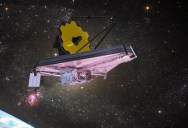
The James Webb Space Telescope (JWST) is one of the most impressive technological achievements ever. It has been used to capture some of the most stunning images of our universe ever, and it continues to be an essential tool in improving our understanding of our place in it.
JWST is equipped with many different instruments that were custom-built to take advantage of the incredible system it has in place. Given the fact that it is positioned out in outer space away from Earth, it is very difficult to have any work done to the telescope itself.
This is why it was so disappointing when it was discovered that there was a flaw in the system. After the launch, it was quickly discovered that electrical charges in the system caused bleeding to form between certain pixels.
This is called the brighter-fatter effect. University of Sydney PhD student Max Charles talked about it, saying:
“The problem was in the infrared detectors. It’s common for almost all the observing modes, but the one [head of Charles’ lab, Professor Peter Tuthill] created is a very high-resolution mode, and this was where it was particularly damaging.”
Shutterstock
When astronomers used the telescope to work on a given project, they would sometimes be very disappointed that much, or even all, of the data they got back was plagued with this problem, rendering it mostly useless.
A colleague of Charles experienced this when he got the exciting opportunity to use the JWST. He was still able to publish his findings, but only about 20% of the data was usable.
This problem affected many different astronomers and limited what people could learn from certain types of data gathered. Some of them were able to come up with solutions that would work, at least in part, on their own data, but none could find a broad solution that would solve the problem.
Charles explained:
“It had to be a software fix. If there was something else that could have been done, we would have tried it. We tried a lot of software fixes, and this was the only one that stuck to the wall.”
Working with Louis Desdoigts, a solution was found that looked promising. They were able to prove out their theory after the JWST was used to look at IO, one of the moons of Jupiter.
Normally, the JWST isn’t the best tool for looking at something so close, but this proved an excellent opportunity. Since this moon had been photographed by the Galileo and Juno spacecraft in the past, they had access to very precise records of what it looked like.
Shutterstock
They could then compare the results from the JWST after they applied their fix to the known accurate pictures, and they found that it matched up perfectly.
The study is available on arXiv, and it has been accepted by the Publications of the Astronomical Society of Australia.
If you think that’s impressive, check out this story about a “goldmine” of lithium that was found in the U.S. that could completely change the EV battery game.





Sign up to get our BEST stories of the week straight to your inbox.
