
Here’s When 2026 Will See Its Next Supermoon, And Why It’ll Be Worth The Wait

Pexels
It’s our dependable nightly companion and for sure we take it for granted (case in point: plans to mine it for rare gases and minerals).
But when you take the time to look up at the sky, there’s something fascinating, comforting even about the moon.
The Romantic poets used it as a symbol of love, longing, and the sublime power of nature; fantasy writers tend to use it to represent magic and transformation. And let’s not even think about its haunting qualities in horror films.
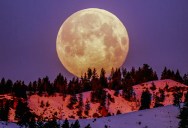
However we might feel about the moon, there’s a few moments every year that make us all stop and admire it: the supermoons. And the good news is that 2026 is unlikely to disappoint.
Pexels
Every year, we see a total of three or four supermoons from Earth – and though 2026 is only going to have three, they’re no less spectacular.
Known as the point at which the moon reaches its perigee (the name for its closest distance to Earth along its elliptical orbit) whilst in its full moon phase, a supermoon is characterised by its largeness in the sky – and a significantly increased brightness too.
2025 was a particularly interesting year for supermoons, since three of four occurrences happened in quick succession – in October, November, and December 2025 – a rare phenomenon that won’t happen again until 2028.
But those waiting for 2026’s supermoons will now need to exercise a little patience – though it’ll absolutely be worth the wait.
Pexels
According to an article from the BBC’s Sky at Night Magazine, while the first supermoon of 2026 – the Wolf Moon – has already passed, occurring early in the calendar year on January 3rd, we still have two to go this year – and their names are fascinating to say the least:
“The January 2026 supermoon is the Wolf Moon, rising on 3 January, so-called because wolves don’t hibernate during winter, and so the cold, quiet January months were notable for the distinct howling of wolves. On 24th November, the second of 2026’s supermoons rises, known as the Beaver Moon. This nickname refers to heightened activity among beavers around November, building dams and stocking up on food before winter. On 24th December, we mark the final full Moon of 2026, known as the Cold Moon – a reminder of the harsh weeks ahead.”
Though it’s a fair while to wait until the Beaver Moon, moonwatchers needn’t be too disappointed, since 2026 also has lunar eclipses in store for us too.
There’s always something to see when you check out the sky at night.
If you thought that was interesting, you might like to read about why we should be worried about the leak in the bottom of the ocean.





Sign up to get our BEST stories of the week straight to your inbox.
