
NASA’s Perseverance Mars Rover Has Long Been Breaking New Ground – But This Recent Development Is A Real First

Shutterstock
If it seems like you’ve blinked and now AI is everywhere, you’re not alone.
In fact, a 2026 report in Britain found that 73% of people used AI in their day-to-day lives (though 3% had never heard of it).
That statistic is massive: almost three-quarters of people using AI for a variety of daily tasks – something that would have been unthinkable just a few years ago.
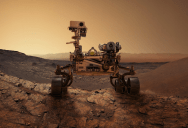
And now, even NASA are getting in on the action, with AI being used to create a safe route for the Perseverance Mars rover for the first time.
NASA
As NASA explained in a statement, the AI-planned routes (the first on another planet) occurred back in December 2025, with the vision-language model analysing data from previous routes as well as visual data to help Perseverance navigate the challenging surface of the Red Planet.
But why would NASA’s scientists use AI for route planning. Won’t it eventually erase their jobs?
Well, sort of. However, like in all aspects of working life, the use of AI for some jobs – particularly admin-heavy ones – allows personnel to dedicate their time to more challenging and cerebral or person-centric tasks. It’s a step forward, as NASA Administrator Jared Isaacman explained in a statement:
“This demonstration shows how far our capabilities have advanced and broadens how we will explore other worlds. Autonomous technologies like this can help missions to operate more efficiently, respond to challenging terrain, and increase science return as distance from Earth grows. It’s a strong example of teams applying new technology carefully and responsibly in real operations.”
Shutterstock
Over December 8th and 10th 2025, the two AI-planned journeys successfully took Perseverance 689 feet and 807 feet, respectively – a huge success that marks out a promising path for AI in NASA’s plans going forward.
This sounds simple, but is no mean feat thanks to the slopes and sand, boulders and bedrock present on Martian terrain. But the combination of the AI planning and visual data from Perseverance’s cameras made this possible, as NASA JPL’s Vandi Verma continued:
“The fundamental elements of generative AI are showing a lot of promise in streamlining the pillars of autonomous navigation for off-planet driving: perception (seeing the rocks and ripples), localization (knowing where we are), and planning and control (deciding and executing the safest path). We are moving towards a day where generative AI and other smart tools will help our surface rovers handle kilometer-scale drives while minimizing operator workload, and flag interesting surface features for our science team by scouring huge volumes of rover images.”
Who had AI becoming interplanetary on their 2026 bucket list?
If you thought that was interesting, you might like to read about why we should be worried about the leak in the bottom of the ocean.





Sign up to get our BEST stories of the week straight to your inbox.
