
Remarkable Bacteria Living In Carlsbad Caverns May Prompt NASA To Take A New Approach When Searching For Extraterrestrial Life

Shutterstock
If you are among the approximately 500,000 people who visit Carlsbad Caverns National Park each year, you know that this is an incredible place.
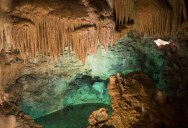
It is home to around 120 underground caves that formed millions of years ago. Unlike many caves, however, these were originally formed by sulfuric acid that worked its way up from deep within the Earth.
This acid would eat away at the limestone, creating a unique underground environment. Eventually, this led to collapses from above, which created huge caverns, including “The Big Room,” which is the largest cave chamber by volume in North America.
When this type of thing happens, it also makes it so that rain, snow melt, and other sources of water can work their way down through the soil and limestone into the cave. This makes the iconic stalagmites and stalactites that caves are so famous for.
Shutterstock
The US Geological Survey (USGS) explains:
“The speleothems in Carlsbad Caverns are due to rain and snowmelt soaking through limestone, and the water absorbing gasses and minerals from the limestone. When this water evaporates and emits carbon dioxide, calcite remains and slowly builds up over time. Stalactites form on the ceiling, while water that falls to the floor deposits minerals, creating stalagmites.”
For most people, this may be interesting, but the caves look similar (to the casual observer) to most any other caves, so what makes this one interesting to NASA?
Well, if you visit, you will enter the cave area and turn a corner, travel further, and then take another corner. If you don’t have any flashlights or other sources of illumination, you will eventually get to a big alcove that is pitch black.
Absolutely no natural light ever reaches this area.
When you turn your flashlight on, however, you’ll notice that the wall is bright green. This is odd since green is usually an indication of photosynthesis, which of course, requires sunlight.
Scientists tested the green substance and found that it came from cyanobacteria. This bacteria photosynthesies light, but not the normal sunlight like plants on the surface.
Instead, it uses near-infrared light. This type of light has very long wavelengths, and the limestone rock from the cave acts as a mirror to it. So, while the light at the visible spectrum is absorbed by the limestone, the near-infrared light bounces around all the way into the depths of this cave.
The bacteria, which have chlorophyll d and f, can absorb that light and turn it into the energy that is needed to survive. It does this so well that it is expected that the bacteria have been living in the cave for nearly 50 million years.
Shutterstock
Hazel Barton is a professor of geological sciences at the University of Alabama, and she told BBC Future:
“The vast majority of stars in our galaxy are these M- and K-type stars. This means most of the stars in our galaxy are putting out near-infrared light.”
Currently, NASA and other groups spend most of their time and budget related to the search for extraterrestrial life looking around stars that emit visible light, like our own.
After studying this bacterium and showing that life can evolve in extreme conditions where no visible light exists, it is hopeful that NASA will expand its search to include the many other stars and planets where only near-infrared light is produced.
If you think that’s impressive, check out this story about a “goldmine” of lithium that was found in the U.S. that could completely change the EV battery game.





Sign up to get our BEST stories of the week straight to your inbox.
