
Experts Thought This Ancient Fish Went Extinct Millions Of Years Ago, But Somebody Caught One On Camera For The First Time Ever.

Chappuis et al., Scientific Reports, 2025 (CC BY-NC-ND 4.0)
There are lots of animals in the ocean, and sadly, many of them are quite rare and hard to catch a glimpse of. One type of fish, however, is so rare that it was once thought to be extinct, and it is one of the very few remaining direct descendants of a species of fish that was swimming the oceans over 420 million years ago.
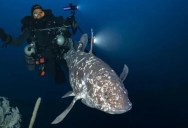
That is why it was so exciting when divers caught a live Sulawesi coelacanth fish on video off the coast of Indonesia. This is one of only two known living species of coelacanth in the ocean. They were once believed to have gone entirely extinct around the same time that the dinosaurs did, but then one was found in 1938 by a fisherman. And one of these exact fish was seen at a fish market in 1997.
In October of 2024, divers were swimming at a depth of 144 meters (472 feet) somewhere in the North Maluku province of Indonesia when they saw a 1.1-meter (3.6 feet) long Sulawesi. The researchers published a study on their findings in the journal Scientific Reports, in which they said:
“Interestingly, it was out in the open, not inside a cave or under an overhang, which have long been considered coelacanths’ diurnal hides.”
Chappuis et al., Scientific Reports, 2025 (CC BY-NC-ND 4.0)
Another thing that they found interesting and unexpected was related to their dorsal fin, which is a bony fin that is unlike the vast majority of fish alive today. The team commented on this, saying:
“When the observation was made, the animal already had its dorsal fin completely erect and kept it like this all the time, which could be associated with an active state or potentially a natural defensive behaviour.”
There is a growing tourism industry that focuses on finding endangered animals in the oceans and getting a look at them. Unfortunately, this can bring untrained divers into contact with highly endangered animals, which can put them at risk. The researchers explain:
“Today, all known coelacanth populations are under anthropogenic pressure globally, and new threats may well arise in the near future with the development of potentially lucrative and unregulated coelacanth tourism activities. Therefore, to protect a potential new population of the vulnerable L. menadoensis from disturbance, the exact locality of this discovery has been withheld until further studies are conducted and better protections are in place.”
This is a wise precaution that will help to give these rare and ancient ‘living fossils’ a chance to survive and hopefully live for millions more years into the future.
If you thought that was interesting, you might like to read about why we should be worried about the leak in the bottom of the ocean.





Sign up to get our BEST stories of the week straight to your inbox.
