
Ancient Clay Tablet Reveals That The Babylonians Knew The Pythagorean Theorem Over 1,000 Years Before Pythagoras Lived

Shutterstock
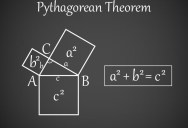
If you have taken high school geometry, you have learned about the Pythagorean Theorem (even if you don’t remember it today). The theorem is an essential part of Euclidean geometry, and it goes as follows:
In a right triangle, the square of the length of the hypotenuse is equal to the sum of the squares of the length of the other two sides.”
Pretty simple, right? Well, yes, but it is also very important. That is why almost everyone at the very least remembers the name of the theorem, which comes from the ancient Greek philosopher and mathematician named Pythagoras.
With that in mind, it is a common assumption that Pythagoras was the one who first developed the theorem, but that is not actually the case. In fact, it was known for over 1000 before he even lived.
The earliest known evidence for the Pythagorean Theorem comes from an ancient clay tablet called, “IM 67118.” This tablet uses the theorem to determine the length of a diagonal within a rectangle, and it dates from the Old Babylonian period, which was between 1900 and 1600 BCE (Pythagoras was born around 570 BCE, for comparison).
Interestingly, this tablet is believed to have been used as a teaching tool, which indicates that even at that early point in history, the concepts of this theorem were widely known and used.
Shutterstock
There are other tablets that use the theorem during that period as well, further showing that it was well known. In a paper on the topic, mathematician Bruce Ratner wrote:
“The conclusion is inescapable. The Babylonians knew the relation between the length of the diagonal of a square and its side: d=square root of 2. This was probably the first number known to be irrational. However, this in turn means that they were familiar with the Pythagorean Theorem – or, at the very least, with its special case for the diagonal of a square (d2 = a2 + a2 = 2a2) – more than a thousand years before the great sage for whom it was named.”
This begs the question, why is it known as the Pythagorean Theorem if it was known so long before his time? Ratner explains:
“One reason for the rarity of Pythagoras original sources was that Pythagorean knowledge was passed on from one generation to the next by word of mouth, as writing material was scarce. Moreover, out of respect for their leader, many of the discoveries made by the Pythagoreans were attributed to Pythagoras himself; this would account for the term ‘Pythagoras’ Theorem’.”
So, the bottom line is that while he was not responsible for coming up with it, he and his school did help to teach it and were widely respected, so he was given the honor of having it named after him.
If you think that’s impressive, check out this story about a “goldmine” of lithium that was found in the U.S. that could completely change the EV battery game.





Sign up to get our BEST stories of the week straight to your inbox.
