
The Spix’s Macaw Is Extinct In The Wild And One Of The Most Endangered Species On The Planet, But A Recently Hatched Chick Gives Hope To Conservationists

Shutterstock
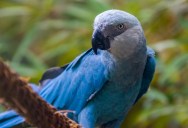
There are lots of endangered species in the world, but few of them are at more risk than the Spix’s Macaw (Cyanopsitta spixii). This is the bird that the 2011 movie Rio was based off of, so it does enjoy something of a celebrity status.
It was last seen in the wild in 2000 and was officially listed as extinct in the wild. There is a breeding population of the birds held in various zoos and conservation facilities around the world, however, so there is still hope.
Unfortunately, the conservationists have had difficulty getting the bird to reproduce successfully, which led many to think that its total extinction was only a matter of time.
Bird keepers at the Pairi Daiza, a private zoo in Belgium, were overjoyed when they found that an egg was properly fertilized. This comes after 100 previous eggs were laid unfertilized.
When the discovery of this 101’s egg was made, the conservationists quickly snatched the egg out of the nest. This is because first-time moms of this species are notoriously bad at caring for their eggs. A team of specialists took care of the egg until it hatched on September 21st, 2025.
Shutterstock
The team has continued caring for the young chick, tirelessly feeding it every two hours throughout the day and night. In a statement about the exciting chick, Thomas Biagi, who is a rare bird keeper at the private zoo, said:
“Feeding the chick every two hours is exhausting, but also incredibly motivating, because we know we’re literally holding the future of one of the world’s most endangered species in our hands.”
Assuming the birds’ development continues to go well, it represents an important addition to the overall conservation efforts. Having a young bird will help to expand the breeding population, which is important for genetic diversity.
In addition, the conservationists are already working on figuring out exactly why this egg was a success, unlike the 100 previous ones. They have a theory that it was due to a change that was made in the diet of its parents.
This species of bird tends to live 20-30 years on average, but with proper care in captivity, they can live up to 40 years, so assuming the hatchling makes it through its critical first several months, the species has a new lease on life.
If you think that’s impressive, check out this story about a “goldmine” of lithium that was found in the U.S. that could completely change the EV battery game.





Sign up to get our BEST stories of the week straight to your inbox.
