
New Theory Suggests That Massive Dinosaur Footprints Were Responsible For The Pits Where As Many As 18 Smaller Dinosaur Fossils Were Found Stacked On Top Of Each Other

Shutterstock
When people talk about finding dinosaur fossils, they generally picture someone gently sweeping away dust from the massive bones of a T-Rex or other large animal. Most fossils, however, come from much smaller dinosaurs since they were far more common.
While even these smaller dinosaur bodies usually ended up getting buried on their own, there were some ‘death pits’ where as many as 18 of them would get fossilized right on top of each other. When this was first discovered, it sparked a lot of debate about why this would have happened.
It seems quite unlikely that the theropods were collecting their dead and burying them in one pit, so what could it be?
According to the latest and most accepted theories, it was little more than accidently taking a tumble into a deep pit. What is interesting about this, however, is how the pits were made.
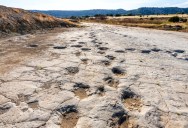
The area where these fossils were found was quite wet millions of years ago. When massive dinosaurs walked, they would often leave huge footprints. That, the theory goes, is what caused the deep pits where these fossils were found.
Shutterstock
The pits are 1-2 meters (3.5-6.5 feet) deep and they were formed very quickly, which lines right up with the idea that they were caused by the feet of bigger dinosaurs. One likely species that could have caused this type of footprint was the sauropod, which is the largest known terrestrial animal ever to walk the planet. The largest fossils we have of this dinosaur suggests that it would be 36 meters (121 feet) in length and would weigh in at around 70 tons (70,000 kilograms or 154,323 pounds).
Smaller dinosaurs, including non-avian theropods, might easily fall into these pits when they were freshly made, and they would be unable to get out. This could happen as they were being chased by predators, by simple accident, or even because a group of them was following a leader who made the bad choice to jump in.
The dinosaurs would become trapped and die either due to fighting each other, being trampled, or even by being attacked by a larger dinosaur that could kill these smaller ones and then escape the pit. Geologist David Eberth of Alberta’s Royal Tyrrell Museum said to National Geographic:
“It’s very likely that other kinds of animals would have entered these pits but were able to get out. We picture quadrupeds being able to get out of these pits because they essentially had a natural four-wheel-drive to pull themselves out.”
This whole process could have taken place over the course of days, weeks, or even months. As the small dinosaurs died, the new ones that entered the pit would struggle on top of them until they died, and then their body would lay stacked up.
Repeat this process as many as 18 times, and the results are exactly what was found in the modern day.
Shutterstock
Footprints also make an environment that is more likely to create fossils than many other places. Since the footprint is put into relatively soft ground, the bodies of the dinosaurs would have been covered up by sediment more quickly than if they died on rock or other firm ground.
Once covered, their bodies would be well preserved and fossilized for millions of years until modern humans stumbled across them.
If you think that’s impressive, check out this story about a “goldmine” of lithium that was found in the U.S. that could completely change the EV battery game.





Sign up to get our BEST stories of the week straight to your inbox.
