
When Getting Started With Enjoying The Night Sky There Are A Few Things You Need To Know To Get The Best Experience

Shutterstock
It is a well-known fact that the universe around us is mostly empty, but what is there is absolutely incredible. Fortunately, given the massive size of space, even the relatively small amount of material means that there is always something to see.
As people go through life, they often start out in awe of the stars and the planets, which is why kids love outer space so much. For many, that interest goes away as they begin to grow up, but once they become mature adults, the sense of amazement tends to return, and with good reason.
So, whether you are trying to foster your kids’ sense of wonder about the universe or you are just getting back into amateur astronomy, it is good to learn how to get the best possible experience.
Fortunately, you can do that with very little, or even no, equipment if you do it right.
The first thing to keep in mind when getting started with any type of astronomy is that there is always something to look at. While major events like asteroids visible to the naked eye are somewhat rare, you can find something on any clear night if you just look up.
Sign up to get our BEST stories of the week straight to your inbox.
Shutterstock
Some examples of things that may catch your attention in the night sky include:
- The Moon – When was the last time you really looked at the moon? The many craters, how their appearance changes through the phases, and looking at the area that is not illuminated on a given night. You can spend hours looking at the moon on a clear night, even without a telescope, and with one, it gets even better.
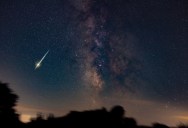
- Meteors – Most people think they can only witness meteors during a peak event like the annual Pleiades event, but that is not the case. On average, there are about 10 meteors that pass through an area of the visible sky per hour. Simply lying out, looking up, and thinking about the heavens will ensure you catch the lights streaking across the sky.
- Planets – Depending on the time of the year, you can almost always see planets with the naked eye, including Saturn, Jupiter, Mars, and Venus. If you have a telescope, your odds become much better.
- Space Stations & Satellites – It isn’t just the natural objects in the sky that can be incredible to look at. You can also witness certain manmade objects flying overhead if you know where to look. The International Space Station (ISS) is often visible streaking across the sky, and it will pass by multiple times each night, so you have plenty of chances to catch it.
These are just a small number of things that you can look for on any given night. When you add in things like asteroids, comets, and other astronomical events that come and go all the time, it is easy to see why people are so amazed by space.
Shutterstock
Keeping up with the astronomical current and upcoming events is easier than ever, which allows you to plan what to look for on a given night and what will be visible from your location.
So, if you’ve been looking for ways to spend more time in the great outdoors, consider just looking up and seeing what might amaze you each night.
If you enjoyed this story, check out this post about the amateur astronomer who discovered a galaxy made up of just 40 stars.





Sign up to get our BEST stories of the week straight to your inbox.
