
Deep Sea Mission Explores The Coldest Depths Of The Antarctic Ocean And Captures Incredible Video Of Squids And Other Sea Life

Shutterstock
Antarctica is one of the most remote and harsh areas on the planet, which makes it very difficult to study. If a scientist wants somewhere that is even harder to explore, all they need to do is look down below the ice into the near-frozen depths of the waters. So that is exactly what one team of scientists did, and they were rewarded with some incredible sights.
From December 2024 to January 2025, the Minderoo-UWA Deep-Sea Research Centre team took a remotely operated vehicle and had it dive down over 1000 meters (3280 feet) below the surface of the water at the Antarctic Peninsula. They knew that they would be looking at a part of the Ocean that has hardly ever been seen before, but what they found surprised even them.
The first of three incredible cephalopods they saw is known as a Moratoothopsis longimana, which is a white squid that has long tentacles. When they shared the video on Instagram, they said:
“Not much is known about this deep-sea species, but its name hints at its unusually long arms. Likely a midwater hunter, it’s a rare observation.”
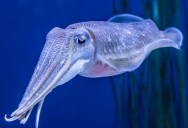
Next, they came across the Slosarczykovia circumantarctica, which is a translucent squid that has skin which allows you to easily see its internal organs. The squid’s large luminous eyes are very distinctive and allow it to navigate through this part of the deep ocean where sunlight cannot reach.
Finally, the vehicle dove even further down to depths reaching 1500 meters (4921 feet) where they recorded an Alluroteuthis antarcticus, which is a scarlet-red squid that is rarely ever seen. This one held some type of prey in its tentacles. The researchers described this as the biggest surprise of their entire expedition.
To see the incredible animals that they witnessed, check out this video:
The sea life in this part of the ocean has had to adapt to the extreme cold water. Some animals here have blue blood, which is able to transport oxygen to the tissue of the body more efficiently at such cold temperatures. Other life has a special protein that serves as an antifreeze, allowing it to function in these depths.
Life finds a way, even in the coldest of waters.
Thought that was fascinating? Here’s another story you might like: Why You’ll Never See A Great White Shark In An Aquarium





Sign up to get our BEST stories of the week straight to your inbox.
