
New Study Shows That Blind People’s Perceptions And Associations Of Color Are The Same Thanks To Language

Pixabay
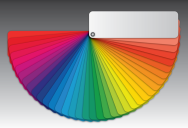
What color do you associate with nature? With cold? With hot?
If you answer ‘green’, ‘blue’, and ‘red’, then congratulations – your color associations are the same as the majority of other people.
This includes, surprisingly, people who were born blind.
According to researchers from the University of Wisconsin, Madison, this is because significant color associations are made not by what we see, but through the language that we speak and hear.
Pixabay
In their recent paper, which was published in the journal Communications Psychology, the authors explain that common understandings of color and other sensory perceptions are misguided:
“Much of what we know about the world we learn through personal sensory experience. This can lead to a presumption that people who lack certain sensory experiences cannot have the knowledge these experiences impart. For example, it was long thought that blind people have no knowledge or understanding of color. Behavioral studies, however, show that despite having no direct visual experience, congenitally blind people possess richly structured visual knowledge.”
With this in mind, the researchers wanted to understand not only how people who were born blind gain their perceptions of color, but also how the commonalities between these perceptions between blind and full-sighted people occur.
In particular, they aimed to test the theory that language was the main drive of the connection between color and concepts (like red and hot, green and nature, for example) rather than visual experience, as they continue in their paper:
“Despite never seeing colors, some congenitally blind people judge the similarity and difference of color words in ways nearly identical to sighted people. Congenitally blind people’s judgments of what colors are typical of various objects are broadly similar to that of sighted people, and they have similar intuitions about which objects have consistent colors (e.g., fire trucks, traffic lights, police uniforms) and which do not (e.g., lunch boxes, cars). Taken together, these findings provide an empirical counterpoint to philosophical speculation about the empty nature of visual knowledge in the absence of direct perceptual experience and suggest that languages are far richer repositories of perceptual information than has been generally acknowledged.”
So with a test group of blind and full-sighted participants, the team put their theory to the test.
Pexels
First of all, they used computational tools and mathematic methods to plot collocations (two things usually in close proximity) of words and colors onto a graph. These tools, including AI, scoured thousands of sources, including books and newspapers, magazines and blogs, to generate a graph in which these collocations were clear.
Next, they gathered 32 participants (12 who were blind, 20 who had sight) and asked them to place antonyms (opposite words like hot-cold, clean-dirty, fast-slow) on a color scale, with nine colors – red, orange, yellow, green, blue, brown, purple, black, and white – to choose from.
With the data from each of the participants compiled, the team was able to form comparisons between how blind and sighted individuals associated colors with words and concepts.
And the results were very telling, with high (but not complete) levels of similarity between all participants and their color associations.
Liu et al/Communications Psychology
Then, the researchers plotted these on a graph alongside information from the computational study of literature.
Their graph, which showed clearly a level of association derived not from what we see but from what we learn, shows not only that regardless of sight we learn these color associations in the same way, but also the importance of social learning, as they explain in their paper:
“How can people with no direct experience of the visual world come to possess rich visual knowledge? Our findings suggest the answer is language, specifically, its distributional structure embedded in which is a rich repository of information about the perceptual world. This information can be accessed through associative learning mechanisms. In addition to helping explain the similarities in responses between blind and sighted people, our results suggest that the semantic alignment between sighted people may owe itself in part to learning from the distributional structure of natural language.”
In a world in which the reading and writing – while still important – have become somewhat secondary to technology, this study shows the importance of human language to all of our development.
If you found that story interesting, learn more about why people often wake up around 3 AM and keep doing it for life.





Sign up to get our BEST stories of the week straight to your inbox.
