
The World’s First Human-To-Human Heart Transplant Took Place In 1967 And Was Met With Public Outrage

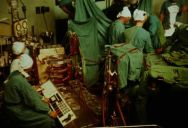
David KC Cooper, Global Cardiology Science & Practice 2018, CC BY 4.0
Organ transplants today are a life-saving option that offers many people a solution to damaged or unhealthy organs including the liver, kidney, lungs, and even the heart. While heart failure was once a death sentence, today people who are lucky enough to get a heart transplant can live a healthy life for decades after the procedure is completed.
While still incredible, this surgery is much more commonplace today than ever before and it is widely seen as a miracle of modern medicine. When the first human-to-human heart transplant was performed, however, it was not only an extraordinarily risky procedure, but it was met with public outrage throughout most of the world.
The first heart transplant that took a healthy heart from one person and gave it to another happened in 1967. The patient was Louis Washkansky, and he was suffering from severe heart failure due to a condition called ischemic heart disease. He was running out of time, and medications and other treatments were no longer effective. So, with that in mind, he agreed to undergo the first ever human-to-human heart transplant. This would only happen, however, if a donor heart became available before it was to late.
Tragically, 25-year-old Denise Darvall lost her life in a traffic accident on December 2nd of that year. Her heart was not damaged, and was still beating, despite the fact that she was declared brain dead. After getting the necessary permission from her loved ones, Washkansky’s surgery was quickly scheduled.
The procedure for this heart transplant may not look exactly like the same procedure does today, but the mechanics are about the same. Darvall’s heart was stopped and her sternum was opened up to reveal the healthy heart. It was then provided with her own oxygenated blood supply, and it was cooled down to help prevent any damage during the procedure. Once ready, Washkansky’s heart was removed and Dr. Christiaan Barnard proceeded to take the donor heart and connect it to Washkansky’s vessels.
The process went smoothly and without incident. The donor heart was quite a bit smaller than the original, but after a period of adjustment, it began to beat normally and the team could close Washkansky’s chest up.
By all accounts, the surgery was an incredible success. The heart beat normally and the patient began to recover.
Shutterstock
Almost ironically, however, Washkansky contracted pneumonia in the following days. The immunosuppressive drugs made it so his immune system could not fight it off, and his other organs began to fail. After just 18 days with his new heart, Washkansky passed away due to organ failure in his lungs and several other organs, not including his heart.
While this surgery may have bought Washkansky a little bit of extra time, it served as proof that heart transplants like this could be done successfully. By the fifth human-to-human heart transplant, the patient lived for 13 years after the surgery, and the 6th one allowed the patient to live for 24 years.
Not surprisingly, this first ever surgery of its type got a lot of attention from the media. While many in the medical community were excited about this new option, and those who struggled with heart issues saw it as a new glimmer of hope, not everyone liked what they say.
People around the world were outraged, calling Dr. Barnard a butcher and sadistic, many even calling for him to be arrested. While heart transplants seem almost normal today, it is easy to understand why people were weirded out by it when it happened for the first time.
Medicine, like most technology, can seem like science-fiction (or even horror) at first, but once it is proven out, society adjusts and accepts the incredible advancements as normal.
Today, nearly 60 years later, people are enjoying decades of extra time that would not be possible if it weren’t for this innovative surgery.
If you think that’s impressive, check out this story about a “goldmine” of lithium that was found in the U.S. that could completely change the EV battery game.





Sign up to get our BEST stories of the week straight to your inbox.
