
What Were The Odds Of Survival On The Titanic? It Primarily Depended On Your Class And Gender

Shutterstock
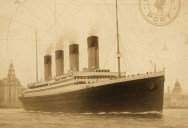
The Titanic is by far the most famous maritime disaster in history. Its sinking has spawned many documentaries, books, TV shows, and of course, iconic movies. At the time, the Titanic was the largest ship in the world, measuring 882 feet long with a gross tonnage of 46,328 tons. While the ship is relatively small by modern standards, it still had 2223 passengers and crew onboard for its maiden voyage.
Of those 2223 passengers, only 706 survived. It is worth noting that these numbers are from a US Senate Inquiry. The British inquiry that took place reported that there were 2201 total passengers and crew, and 710 survivors. Records were not as precise then as they are now, but whatever the exact numbers, the fact is that under a third of the total passengers survived.
These numbers were so low largely because there weren’t enough lifeboats on the ship. The original design for the Titanic had 48 lifeboats, but having so many apparently made the decks look cluttered. At the time, many believed that this ship was all but unsinkable, so the lifeboats weren’t a priority.
On its only voyage, the Titanic had just 20 lifeboats with a total capacity of 1178 people. That means that there was enough room on the lifeboats for roughly half of the people who were onboard, and that is if each lifeboat was completely full. It is known that many lifeboats left the ship before they were full.
Shutterstock
The chances of survival on the Titanic were largely based on what class of passenger you were, and whether you were a man, woman, or child. First class children had the highest odds of survival with some accounts saying none died and others saying that one 2-year-old Canadian girl died. First class women also did pretty well, with a 97% survival rate. These two groups benefitted greatly from the fact that the captain of the ship ordered women and children to get on the lifeboats first.
Second class women had an 86% chance of survival, and third class women had just a 46% chance. Men fared much worse, with first class men’s survival rate being just 32%, second class being 8%, and third class being 16%.
With so many deaths taking place on that fateful night, it may be surprising to learn that none of the 700+ people who died while physically on the ship or in the waters around it had their remains recovered even to this day. The waters in this area were extremely cold and deep, making recovery efforts almost impossible. As with anything that dies in the sea, the bodies of the deceased were undoubtedly consumed by the many creatures who live in the deep.
If you thought that was interesting, you might like to read about the mysterious “pyramids” discovered in Antarctica. What are they?





Sign up to get our BEST stories of the week straight to your inbox.
