
Massive Sinkhole Like Cracks Are Expected To Be A Major Geo-Hydrological Hazard For Much Of The Southern Hemisphere In The Coming Decades

Shutterstock
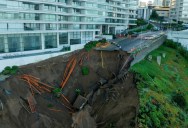
There are many types of natural disasters out there that people need to be worried about. For the most part, precautions can be taken to help minimize the damage, or at least give warning so that people can escape to safety. For millions of people in the Southern hemisphere, however, a giant cracks in the Earth’s surface is a huge danger and very little is being done about it.
A new study is looking at this threat specifically in the Democratic Republic of the Congo, but experts believe that it will be a problem throughout much of the global South and possibly the whole planet in the future. The study was published in the journal Nature and it looks at the fact that massive cracks in the surface of the Earth are big enough to destroy houses, roads, buildings, and other things in the area.
As places like the Congo are becoming more and more urbanized, the problem is being seen more frequently because they are caused in large part by rainwater run-off, which pushes away unstable soils, leaving the area vulnerable to these cracks forming. Unfortunately, many of these urban centers are developed without consideration for the long-term stability and rainwater collection and routing, indicating that the problem will likely become worse in the future.
Shutterstock
The study looked at 26 cities, and identified 2922 large trenches that have opened up. These trenches, which are commonly known as gullies, can widen over time due to the rainwater, putting more and more human structures at risk. From 2004 to 2023, erosion of this type resulted in about 118,600 people being displaced from their homes and communities.
From 2010 to 2023, the researchers estimated that the number of people who are living n places where this type of threat is elevated went from 1.6 to 3.2 million.
The main cause of this risk is disordered urbanization. Unstable soils and a failure to plan for proper drainage systems leaves the rapidly expanding cities unable to handle the heavy rain that is becoming increasingly common in this part of the world. In the study, the authors write:
“Future projections indicate that rainfall intensities in tropical Africa may increase by 10 to 15 percent in the coming decades. Yet, intensive rainfall events are also a main driver of gully formation and expansion. A meta-analysis of observational data worldwide suggests that these predicted increases could easily double gully expansion rates if other factors remain the same.”
Shutterstock
Unfortunately, once a city has been developed, it is very difficult to fix the problems that are putting the structures at risk. It is costly and time consuming to plan and implement mitigation strategies after the fact. Engineers and city planners would be much better off planning new cities or the expansion of existing ones with rainwater management in mind.
The problem with this, however, is that the population growth in the Congo and other areas is so rapid that it is hard to keep up with the growing demands. Planning for this type of risk takes time, and that is often something that the people in the region do not have.
If you thought that was interesting, you might like to read a story that reveals Earth’s priciest precious metal isn’t gold or platinum and costs over $10,000 an ounce!





Sign up to get our BEST stories of the week straight to your inbox.
