
Exciting Advancement In 3D Embryo Models Shows Lab-Grown Cells Making Their Own Blood Supply

Shutterstock
Creating human structures in a lab is always difficult, but when successful, it can open up a lot of possibilities. Recently, researchers have been working on using 3D embryo structures called “hematoids,” which are similar to embryos.
These structures, however, cannot develop into a fetus due to a lack of various essential tissues, a yolk sac, a placenta, and other things.
The benefit of this type of structure, however, is that it is easily observed, allowing researchers to see how development occurs. In a natural embryo, this stage of development would take place after implantation into the uterine wall, making it difficult to safely monitor.
The hematoids in the lab are able to self-assemble from pluripotent stem cells. From there, on the second day of development, researchers found that they had arranged into three layers, which will then be the foundation for the human body.
Those layers are the mesoderm, endoderm, and ectoderm.
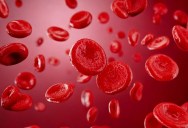
By the eighth day, the researchers found that the hematoid cells were actually beating, which indicates that the development is the precursor to a heart. At two weeks, they could see that the structure was actually producing blood.
In a statement about the accomplishment, co-author of the study, Dr. Jitesh Neupane of the University of Cambridge’s Gurdon Institute, said:
“It was an exciting moment when the blood red colour appeared in the dish – it was visible even to the eye.”
In normal embryonic development, this happens at 4-5 weeks. She went on to say:
Shutterstock
“Our new model mimics human fetal blood development in the lab. This sheds light on how blood cells naturally form during human embryogenesis, offering potential medical advances to screen drugs, study early blood and immune development, and model blood disorders like leukemia.”
The other co-first author of the paper, Dr. Geraldine Jowett, added:
“Hematoids capture the second wave of blood development that can give rise to specialised immune cells or adaptive lymphoid cells, like T cells, opening up exciting avenues for their use in modelling healthy and cancerous blood development.”
There are some significant possibilities that could come from this type of research. In addition to being able to monitor it closely in a lab, advancements may allow the creation of personalized blood.
The study was published in the journal Cell Reports.
If you thought that was interesting, you might like to read about why we should be worried about the leak in the bottom of the ocean.





Sign up to get our BEST stories of the week straight to your inbox.
