
Over A Thousand Years Ago, This Amazonian Lost City Was Abandoned. Now, Researchers Have Told Us Why.

Stephen Rostain
Back in 2024, researchers using aircraft laser sensors discovered something unusual in the Amazon.
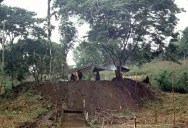
Nicknamed ‘The Lost City of the Amazon’, the remains of an enormous ancient city were buried under the Amazon’s dense vegetation, in the Upano River Valley, eastern Ecuador.
The Lost City had clearly been the home of many, many people in the ancient past – but nowadays it was lying forgotten, underneath the trees and leaves, leaving scientists and historians baffled about why it had been abandoned.
At the time, the most common theory was that volcanic activity had driven the civilization that built the 2,500 year old city away from their homes where they had lived for over 1,000 years.
Antoine Robinson/Stephen Rostain/BBC
According to a new study published in the journal Nature Communications, however, the truth could have been a little different.
Moreover, the researchers – led by Florida Institute of Technology’s Professor Mark Bush and Professor Crystal McMichael from the University of Amsterdam – were able to piece together archaeological evidence to explain how the city grew and evolved over almost three thousand years.
Using a combination of existing archaeological evidence and microfossils obtained from the sediment of a nearby lake, the researchers explained that the Upano civilization first occupied the valley area in around 750 BC, making their own footprint on the region in their time there, as Professor Bush explained in a statement:
“Our study provides an improved timeline of human activity in the valley, as we see people moving in and out of the landscape and different styles of cultivation coming and going.”
Stephen Rostain
Fascinatingly, the study found that while the ecological impacts of the first civilization – including the growth of corn and the planting of alder trees – it was their successors that created the unique landscape that was so recently unearthed.
While the initial civilization abandoned the settlement around 550 AD, the researchers claim that it was the gradual decline of the Amazonian city that caused them to leave, rather than volcanic activity.
Meanwhile, their successors – who lived in the settlement for three hundred years (from 1500 to 1800 AD) planted more corn, as well as cultivating palms that had not previously been found in the region.
All this, from the examination of lake sediment!
If you think that’s impressive, check out this story about a “goldmine” of lithium that was found in the U.S. that could completely change the EV battery game.





Sign up to get our BEST stories of the week straight to your inbox.
