
New Research Suggests Inca Architects Designed These Curious Three-Sided Buildings With One Thing In Mind

Stella Nair
When you look at the Burj Khalifa or the breathtaking new Huajiang Grand Canyon Bridge, you might understandably think that architectural design and engineering are really in their prime.
But it only takes one trip to marvel at ancient structures like they Pyramids of Giza or Angkor Wat to fully comprehend that humans have been building incredible structures for millennia.
As we delve deeper into the old structures around our planet, we can find out fascinating new things about the people who designed and built them, and the societies they were intended to serve.
And thanks to a new study from UCLA art history expert Stella Nair, we can finally understand a little bit more about Inca construction and some of the many unique traits of its individual, intricate buildings.
Stella Nair
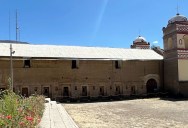
The town of Huaytará in Peru houses a 15th-century Inca structure known as a carpa uasi that, until recently, we’ve not known too much about.
But after spending three weeks studying it, Nair has gathered some fascinating insights into the intricate structure, which is still proudly standing in Huaytará, all these years after its construction.
There is plenty that is fascinating about the carpa uasi, though most of the attention has focused on the fact that it only has three walls, with one open end (hence the name, which means ‘tent house’), despite the obvious negatives of such a structure.
Why? Well as Nair hypothesised in a statement, it could all be to do with the projection of sound:
“Many people look at Inca architecture and are impressed with the stonework, but that’s just the tip of the iceberg. They were also concerned with the ephemeral, temporary and impermanent, and sound was one of those things. Sound was deeply valued and an incredibly important part of Andean and Inca architecture — so much so that the builders allowed some instability in this structure just because of its acoustic potential.”
Pexels
A full understanding of this particular Inca structure is important since, as Nair explained, it is the only known carpa uasi still in existence – perhaps because of the lack of stability. In fact, this one is only still standing because of a church constructed much later, which has effectively propped it up.
By studying the architecture of the building, Nair hopes to gain a deeper insight into how exactly sound would have travelled through the building and, eventually, what particular sounds its architects were hoping to amplify:
“We’re exploring the possibility that the carpa uasi may have amplified low-frequency sounds, such as drumming, with minimal reverberation. With this research, for the first time, we’ll be able to tell what the Incas valued sonically in this building.”
Through a deeper knowledge of the sounds that would have been heard in, and near that carpa uasi all those years ago, we can gain a more thorough understanding of what life sounded like for Inca peoples in the Andes.
If you thought that was interesting, you might like to read about the mysterious “pyramids” discovered in Antarctica. What are they?





Sign up to get our BEST stories of the week straight to your inbox.
