
The Forecasting Of Solar Storms Is Now Possible – And Latest Predictions Have Concerning Implications For Artemis II

NASA
Over the thousands of years that humans have been forecasting the weather, we’ve gotten pretty accurate at it.
Nowadays, meteorologists can use combinations of realtime data and a whole lot of skill to predict everything from whether you’re going to need an umbrella to when and where a typhoon is going to hit.
It’s impressive stuff for sure – and as time goes on, when it comes to forecasting, we’re getting increasingly skilled.
Because incredibly, an international team of scientists have now developed a system that can predict solar storms – that’s right, not just storms on Earth, but flares or Coronal Mass Ejections (CMEs) coming from the Sun.
Pexels
Solar storms can cause problems even here on Earth, since their interactions with our planet’s geomagnetic fields can disrupt satellites and power grids, as well as GPS – and all these things are increasingly relied upon on our home planet.
But even more concerningly, solar storms can be dangerous to astronauts, with increased levels of radiation damaging their nervous systems, increasing their cancer risk, and making them ill too.
Thanks to the new system, which was published in the Journal of Geophysical Research Space Physics, issues like these could be averted, thanks to the new ability to predict ‘windows’ in which solar activity is at its highest.
Using five decades of satellite data, the team were able to identify areas of the sun that produce eruptions thanks to a build-up of magnetic energy, as well as two cycles of activity over 1.7 years and 7 years, with the two lining up meaning a much more significant risk.
Sign up to get our BEST stories of the week straight to your inbox.
NASA/Kim Shiflett
Using their modelling, the researchers forecasted two windows in the near future: from mid-2025 to mid-2026 between 5°S–25°S latitude, and from early-to-mid 2027 between 10°N–30°N latitude.
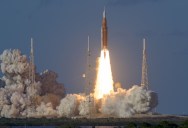
And these predictions have concerning implications for NASA’s upcoming Artemis II mission, in which a crew of four astronauts will fly around the Moon, as Dr. Velasco Herrera explained in a statement:
“NASA is right to postpone the Artemis II mission to the Moon until March, but given how active the Sun is right now, our forecasts suggest that delaying the launch until the end of 2026 may be a much safer decision.”
Whether the mission blasts off in spring 2026 as planned, we’ll have to see, but one thing is indisputable: the safety of our astronauts is paramount.
If you thought that was interesting, you might like to read about a second giant hole has opened up on the sun’s surface. Here’s what it means.






Sign up to get our BEST stories of the week straight to your inbox.
