
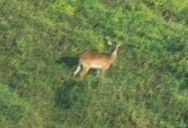
The First And Only Known Photo Of This Critically Endangered Animal Was Taken During An Arial Survey In The Democratic Republic Of The Congo

Upemba National Park
Antelopes are one of the many species of animals that roam through Africa in large herds. They are known for living in large groups, which helps them to survive attacks from lions and other predators. Antelopes, however, are not just a single species of animal, but rather a group with many subspecies.
One of those subspecies is the Upemba lechwe (Kobus anselli), which is one of the most endangered animals in the world and it is believed to be on the brink of extinction. This animal is so rare that a recent photograph taken of it is the only known published picture of this animal.
The Upemba lechwe lives in an area known as the Kamalondo Depression, which is an area in the south of the Democratic Republic of the Congo. While surveying the area, Manuel Weber of Upemba National Parks Department of Research and Biomonitoring was able to snap a picture of the animal. He describes the event to the Guardian:
“It was in the morning of the second day, that a single individual stopped for just a few seconds – long enough for me to press the trigger – before running off like the other individuals we have seen.”
This species of animal was only just described in 2005 when researchers looked at a specimen in museums that were collected in the 1920s-40’s. There have not previously been any confirmed photos, but this one does give some level of hope for the survival of the species. The IUCN estimates that there may be between 600 and 1000 adult Upemba lechwe in the wild. Only ten were seen during the surveys, which makes many experts think the true number may be less than 100.
Shutterstock
All antelopes are pretty skittish since they survive by running away from predators, but this particular species seems to like to stay on the move more than most. This is why it has been so difficult to capture pictures of them up to this point.
What drove this animal to the brink of extinction? Experts say that it is largely due to poaching. In the 1970s, there were an estimated 5000 – 20,000 lechwe in the region, but protections for the animal were minimal. This meant that poachers would hunt them for their meat, driving their numbers down dramatically.
While new protections have been put in place, this species is still very much at risk. Webber said that this photo may be their last hope:
“We hope this image becomes a rallying cry. Because this may be our only chance to save this species.”
The study that included the photo was published in the African Journal of Ecology.
If you thought that was interesting, you might like to read about 50 amazing finds on Google Earth.





Sign up to get our BEST stories of the week straight to your inbox.
