
Beneath The Surface Of Our Oceans, The Usual Whalesong Symphony Is Going Quiet, And The Reason Is Tragic

Pexels
If you’ve ever been snorkelling or diving, you might think of life underneath the surface of the ocean as a quiet, peaceful place.
But that’s merely because your ears have evolved to the conditions outside of the water, rather than to tune into the sounds under the pressure of the water’s surface.
In fact, life under the sea is a fairly noisy place, where all sorts of sea creatures communicate and even echolocate using sound – as underwater recordings evidence clearly.
However, beneath the surface of our oceans, marine animals and ecosystems are undergoing something of a change, and the difference to the underwater symphony is quite alarming.
Pexels
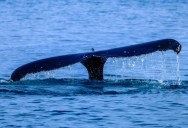
As detailed in an article by National Geographic, one of the most iconic underwater sounds has seemingly gone quiet, with whalesong – used variously for social purposes, mating, and communication – significantly reduced over the last decade.
That’s according to data compiled by a hydrophone placed 3,000 feet beneath the surface of the Californian coast, where researchers have been studying the sounds of aquatic creatures passing by since 2015, in order to greater understand not only the ecosystems that live in our seas, but the effects that human activities and climate change are having upon them.
Though a decade of data, marine biologists have discovered the staggering effects of our terrestrial activities on the creatures in our oceans, finding that warming ocean temperatures and the effects of climate change are silencing some whale species – blue whales and fin whales in particular – thus inhibiting their normal social activities.
This is thanks to observations taken during the effects of ‘The Blob’, a mysterious oceanic heatwave that covered 2,000 miles of the Pacific Ocean, with the 4.5°F temperature rise detrimentally affecting marine ecosystems – including swathes of krill and anchovies that the whales feed on.
Pixabay
Why did this affect the whalesong so dramatically? Well, as the Monterey Bay Aquarium Research Institute’s John Ryan explained to National Geographic, the whales’ inclination to sing was hugely decreased by their hunger:
“These were hard times for whales. When you really break it down, it’s like trying to sing while you’re starving. They were spending all their time just trying to find food.”
In total, the recordings proved that whalesong decreased by 40% during this period, indicating the negative effects that increasing ocean temperatures will have on marine life, from the very smallest to the very largest of creatures.
And since ocean temperatures are only continuing to increase across the planet, thanks to the extreme weather and increasing global temperatures that characterise the present climate crisis, it might not be good news for marine life as we know it, as Oregon State University’s Dawn Barlow continued:
“Science shows that climate change is impacting the oceans. We see that across trophic levels, across ecosystems. Listening and learning from these places is essential to our future. Now more than ever, it’s important to listen.”
Any steps we can take toward protecting our planet, its climate, and its valuable and diverse habitats is worth it: the whales are counting on us.
Thought that was fascinating? Here’s another story you might like: Why You’ll Never See A Great White Shark In An Aquarium





Sign up to get our BEST stories of the week straight to your inbox.
