
Scientists Explain That This Region Of Africa Has A Heartbeat, And What That Means For Its Future

Professor Thomas Gernon/University of Southampton
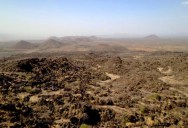
Tucked into the north-east of Ethiopia is an area known as the Afar region (home to the Afar people), a place characterised by curious geology, archaeological wonders, and incredible wildlife.
With two national parks, and native zebras, ostriches, and cheetahs, it’s a place that is teeming with biodiversity as well as historic importance to our species too.
Not only have some of the very first hominin fossils been discovered here, dated at around 2.8 million years old, researchers also discovered the earliest evidence of stone tools in the region.
And perhaps most strikingly, the Afar region is also home to one of our planet’s most incredible volcanic areas – with scientists recently noting that the staggering seismic activity present in the Afar region could soon lead to this part of Africa changing forever.
Dr Derek Keir/University of Southampton/ University of Florence
The Afar region is home to significant volcanic and seismic activity thanks to its unique location, as the meeting point of three tectonic rifts: the Main Ethiopian Rift, the Red Sea Rift, and the Gulf of Aden Rift.
And thanks to this, a research team led by the University of Southampton in England have discovered something quite peculiar, as explained in a paper published by the journal Nature Geoscience.
The region is experiencing rhythmic pulses, not unlike a heartbeat.
That’s all thanks to the molten rock rising up under these rifts, as Swansea University’s Dr Emma Watts – formerly of the University of Southampton – who was the lead author on the recent study, explained in a statement:
“We found that the mantle beneath Afar is not uniform or stationary – it pulses, and these pulses carry distinct chemical signatures. These ascending pulses of partially molten mantle are channelled by the rifting plates above. That’s important for how we think about the interaction between Earth’s interior and its surface.”
Professor Thomas Gernon/University of Southampton
In the research, the team explained that these upward pulses of hot mantle have been suspected by some time, and are leading to a future ocean basin being created when the tectonic plates are pulled further apart.
The heartbeat-like pulses of the hot mantle as it rises have been clearly evidenced by the team tough monitoring, modelling, and the analysis of 130 volcanic rock samples, upon which chemical bands from these beats are plain to see, as the University of Southampton’s Professor Tom Gernon continued in the statement:
“The chemical striping suggests the plume is pulsing, like a heartbeat. These pulses appear to behave differently depending on the thickness of the plate, and how fast it’s pulling apart. In faster-spreading rifts like the Red Sea, the pulses travel more efficiently and regularly like a pulse through a narrow artery.”
Though the evidence of the pulsing hot mantle doesn’t tell scientists quite when the next rupture will occur – that’s the subject of future studies – this vital evidence does show that this already rift-strewn landscape will one day change here forever.
If you thought that was interesting, you might like to read about the mysterious “pyramids” discovered in Antarctica. What are they?





Sign up to get our BEST stories of the week straight to your inbox.
