
Massive Megatsunami Caused By Landslide In Alaska Is The Second Largest Wave Ever Recorded, And Experts Say The Area Will Remain Hazardous For Months To Come

Shutterstock
Any tsunami can be dangerous, but when they are located in a somewhat enclosed area of water, they can be absolutely devastating. That is what happened in the iconic Tracy Arm fjord in Alaska 100 million cubic meters (3.5 billion cubic feet) of land broke loose and fell into the waters on August 10th, 2025.
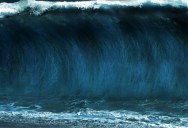
The result of this landslide was the second largest wave ever recorded, measuring in at between 470 and 500 meters (1541-1640 feet) in height.
A state seismologist, Michael West, talked about the event with Alaska Public Media, saying:
“I feel pretty comfortable saying that anything that was actually at the terminus of this glacier, right at the base of this landslide, would have been absolutely obliterated. I cannot see any way around that. Fortunately, we do not have reports of folks who were really close to the slide, say, you know, within a mile or something, but I can only imagine that would have been an extremely violent affair.”
The danger would not have been limited to just the area where the landslide took place, however. Miles south at the entrance to the fjords, cruise ship owner Christine Smith noticed a problem.
She explained:
“[W]e started seeing the water rising again on what should have been a falling tide. We knew something was really different, and wrong.”
She then reached out to a seismologist who was able to talk with the Alaska Earthquake Center and US Geological Survey (USGS). They were able to confirm that they detected seismic activity from a landslide using their instruments that were 1000 kilometers (620 miles) away.
Shutterstock
The area began being monitored closely by satellites and helicopters, measuring the largest waves.
While the 500-meter main wave was the largest, it was not the only wave generated by this landslide. In addition, since the wave occurred inside the enclosed fjord, it went through a process called a seiche, which is when waves move back and forth between the land. The Alaska Earthquake Center says the wave went back and forth about once per minute for 35 hours.
The waters have calmed down for now, but the area is still dangerous because additional landslides (though likely smaller) will likely occur. The USGS reports:
“Steep, mountainous landslide areas are inherently unstable and will continue to change for years following an initial landslide. Continued rockfall and smaller-scale landslide events from the exposed landslide scar are expected and could impact the water, potentially causing future local tsunami. As such, this area remains hazardous.”
Thankfully, there are very few people who go to this area other than cruise ships and nobody was reported to have been hurt in this event.
If you found that story interesting, learn more about why people often wake up around 3 AM and keep doing it for life.





Sign up to get our BEST stories of the week straight to your inbox.
